
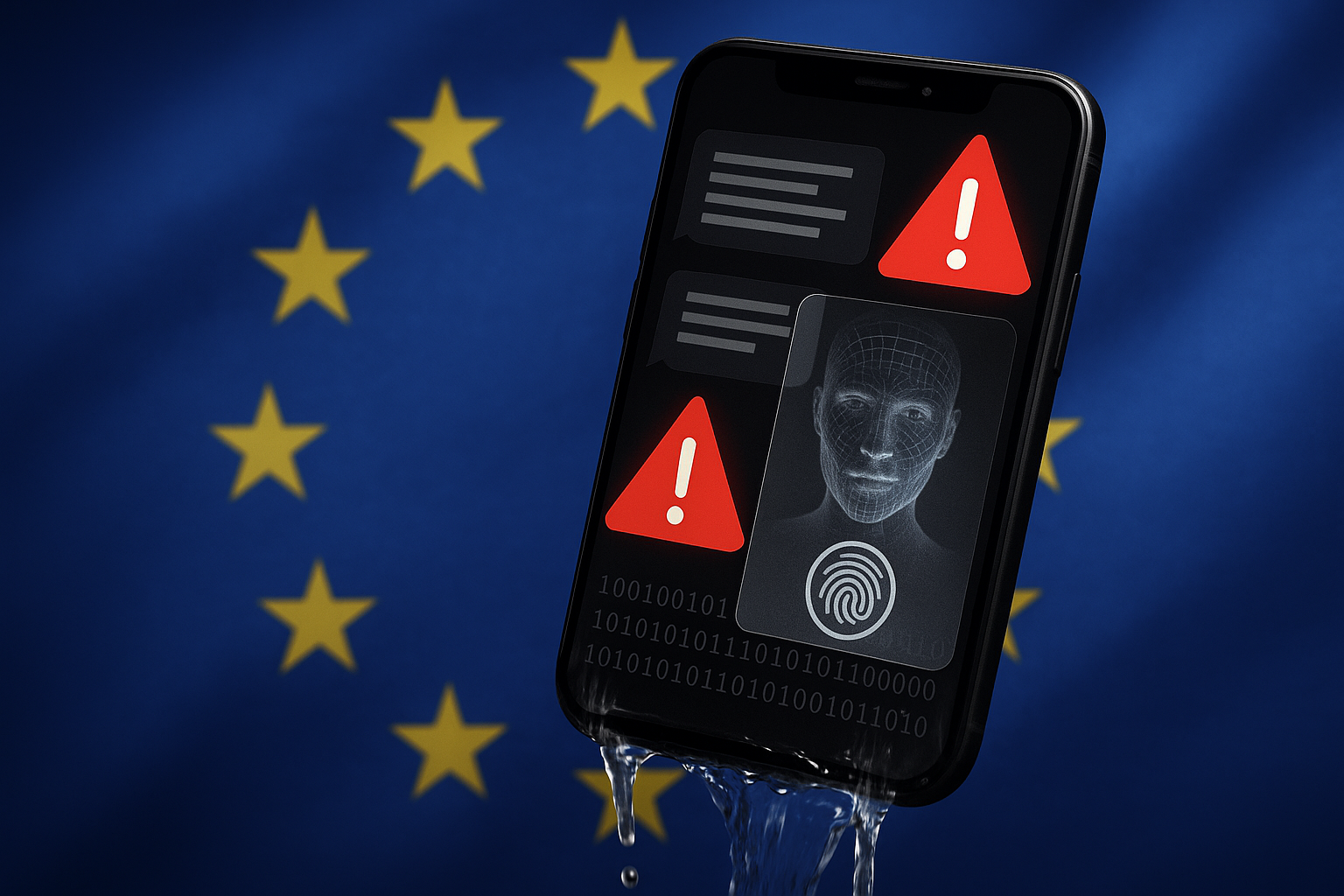
4 Shocking Data Leaks from EU AI App Bans
EU AI App Bans Introduction: When the EU Bans Exposes Data Vulnerabilities
Over the past decade, artificial intelligence has woven itself into nearly every aspect of our digital lives, recommendations, productivity, chat interfaces, personal assistants, and even health apps. But as AI continues to evolve, so too do the risks it brings, particularly when it comes to data privacy, surveillance, and user consent. The rapid growth of AI-driven apps has outpaced traditional oversight, prompting concern among regulators, privacy advocates, and civil rights groups around the world.
In no place is this concern more visible or more consequential than in the European Union.
In early 2025, the EU took bold steps to assert its global leadership in digital rights by enforcing provisions of the Artificial Intelligence Act, a landmark regulation aimed at curbing high-risk and unethical uses of AI across member states. The law categorizes AI systems into four risk tiers: unacceptable, high-risk, limited-risk, and minimal, and grants regulators sweeping powers to fine, restrict, or outright ban apps that violate its strict data protection and transparency principles.
As part of this enforcement, several popular AI apps spanning chatbots, biometric tools, emotion analyzers, and on-device assistants came under review. What regulators found was more than just noncompliant code or vague user agreements. In multiple cases, they uncovered serious data-leak vulnerabilities, including unsecured servers, unsanctioned data transfers, unauthorized biometric profiling, and even government missteps in public-facing AI deployments.
Rather than isolated misconfigurations, these incidents point to a more systemic issue: AI apps, even those approved by app stores and used by millions, may carry hidden risks that only become visible under intense regulatory scrutiny.
These were not obscure apps, either. Among the most notable were tools like DeepSeek, a widely used AI assistant flagged for transferring user data to servers in China; a series of mood-tracking apps accused of emotional manipulation; and even EU-backed public service chatbots that inadvertently exposed citizen data through open APIs.
In each case, the very act of banning or auditing the apps revealed shocking leaks that might otherwise have remained hidden, potentially endangering the privacy and digital safety of thousands, if not millions, of users.
Why does this matter?
Because it’s not just about what AI apps do visibly, it’s about what they do quietly, in the background, with your data. Whether you’re chatting with a health assistant, uploading a face scan, or asking a chatbot about legal aid, there’s often an invisible layer of data harvesting and transmission occurring that users rarely see, and app developers rarely disclose in full.
And that’s precisely what the EU’s enforcement efforts are beginning to uncover.
In this article, we’ll explore four of the most shocking data leaks exposed as a result of the EU’s AI app bans. We’ll detail what happened, who was affected, and how these incidents are reshaping the conversation around data ethics, AI accountability, and digital sovereignty in the world’s most privacy-conscious region.
Because in an era of invisible algorithms and frictionless apps, the real threat isn’t just misuse, it’s the absence of transparency.
Let’s dive in.
1. DeepSeek’s Million-User Chat Logs Leaked Pre-Ban
What Happened
DeepSeek, a Chinese chatbot app with millions of global users, became a prime target. Regulators in Italy, Germany, and the Netherlands banned it for transferring EU-user data to Chinese servers in violation of GDPR. After listing privacy violations, investigators uncovered a publicly available cloud database with over a million chat logs, complete with IP addresses, conversation content, metadata, and auth tokens.
Shocking Scale
- 1 million+ user profiles exposed
- Included private questions, personal opinions, and file uploads
- Potential for real-time account hijacking or user profiling
Regulatory Fallout
- Italy and Germany enforced bans, citing “unlawful data transfer” and failures to secure information
- The EU’s European Data Protection Board launched a rapid response task force to coordinate cross-border investigations
- DeepSeek now faces potential EU-wide removal pending GDPR compliance verification
2. Latent Metadata Leaves EU Phones Vulnerable
What Happened
During app ban enforcement, it was discovered that many smartphone AI apps, especially those integrating chat or assistant APIs, were ignoring permissions and capturing deep metadata, including:
- Keystroke timing and rhythm (for personal profiling)
- Installed app inventory and usage logs
- Microphone snapshots during user interaction
This data was being stored or transmitted even when users had disabled microphone access, violating GDPR and EU consumer protection standards.
Shocking Implications
- Passive data harvesting without explicit user consent
- Data could be used for behavioral profiling or surveillance
- Regulators found metadata logs accompanying app telemetry to cloud services
Policy Response
- France and Ireland flagged the issue in IoT and mobile inspections
- EU Commission’s AI Act guidance now explicitly bans apps from collecting implicit interaction metadata
3. Biometric Overreach in Emotion & Mood-Detection Apps
What Happened
A class of apps using mobile cameras and microphones to detect user emotions or monitor mood was banned as “unacceptable risk” under Article 5 of the AI Act. EU audits revealed these apps:
- Continuously scanned faces without indicator lights
- Stored emotion scores on unsecured servers
- Powered mood recommendations in wellness apps, often without consent
Shocking Violations
- Camera access without real-time notifications
- Unknown lineage of biometric training data
- Unauthorized sharing of emotional profiles with advertisers
Regulatory Reaction
- Swift bans implemented under the AI Act’s February deadline
- GDPR probes launched in Portugal and Belgium
- The EU issued guidance restricting emotion detection to therapy and human oversight scenarios only
4. Gov’t Agency Usage of Deployed AI Chatbots
What Happened
Several EU governments had piloted AI chatbot tools for public services (e.g., tax advisory, immigration, digital IDs). During audits, it was revealed that some systems:
- Stored chat transcripts unencrypted on central servers
- Exposed them via open S3 buckets or misconfigured APIs
- Included sensitive personal data like national IDs, income details, and legal filings
Shocking Exposure
- Unencrypted archives held by municipal or federal agencies
- Some records are accessible remotely, exposing data of thousands
- Included historic conversations without user deletion mechanisms
Enforcement Steps
- Access lockdowns and data erasure mandates are issued immediately
- European Commission flagged breaches as core GDPR issues
- Public discussions now focus on “AI-Public Trust” and the need for audit trails
Why These Leaks Matter
- Regulation reveals issues hidden in plain sight
Bans triggered audits that uncovered massive data leaks long tolerated in early compliance phases. - Low-bar defenses fall short under scrutiny
Permissions and consent banners aren’t enough; apps access deeply sensitive data behind the scenes. - Cross-border coordination is essential
Leaks from a single app led to harmonized bans and fines across Italy, Germany, the Netherlands, and beyond. - THE EU AI Act sets a global privacy model
These leaks show that proactive regulation (like the EU’s phased risk bans) prevents digital harm before it spreads. - User trust hinges on transparency
Without visibility into data movement, public confidence in AI collapses, making recovery harder even after fixes.
What You Should Do
- Ask permission questions: Demand clarity on the purpose and retention of biometric or metadata collection
- Check app sources: Download AI assistant tools only from verified EU-based or GDPR-compliant developers
- Support regulation: Advocate for open-source audits, independent review boards, and transparency reporting
- Keep data off servers: Prefer on-device processing and local AI models that don’t transmit sensitive data
- Stay informed: Follow national privacy regulators such as Italy’s Garante and Germany’s DPA for app safety updates
FAQ: EU AI App Leaks and Regulatory Action
Q1: Why did the EU ban these AI apps?
Because they were deemed “unacceptable risk” violating GDPR, the upcoming AI Act, or misusing biometrics, mood detection, or data transfers without adequate safeguards.
Q2: Are these leaks widespread or isolated?
They’re systemic. App bans exposed problems across chatbot AI (DeepSeek), mood-detection apps, and public sector pilots, pointing to a broader industry issue.
Q3: What can users do if their data was exposed?
Contact the relevant data authority (e.g., Italy’s Garante), request data deletion, and seek compensation if possible. Watch out for unknown content sharing or profiling.
Q4: Will the EU ban affect non-European users?
Indirectly, yes. Major platforms like Apple and Google are reviewing the global availability of banned apps. Even outside the EU, the data policies may be updated.
Q5: How does the EU AI Act fit into this?
The AI Act (phased until 2027) bans biometric profiling, emotion recognition without consent, and intrusive surveillance apps, providing a legal framework for enforcement.
Q6: Should I avoid all AI apps?
Not at all. Just prioritize apps that emphasize privacy by design, on-device processing, clear data flows, and independent audits.

Final Thoughts: The Real Cost of Convenience
These four data-leak scandals show that AI app bans can uncover deeper privacy failures hidden under flashy functionality and compliance checkboxes. The EU is leading the way by not only banning reckless AI tools but also by forcing transparency through enforcement.
If you’re a user, developer, or policymaker, these incidents are a wake-up call: privacy violations often lurk in the background of convenience-first AI. The EU isn’t just saying “no” to certain apps, it’s setting a standard that data protection must be built in, not bolted on. And until AI apps are held to that standard, we all remain exposed.